By Mukul Ronak Das
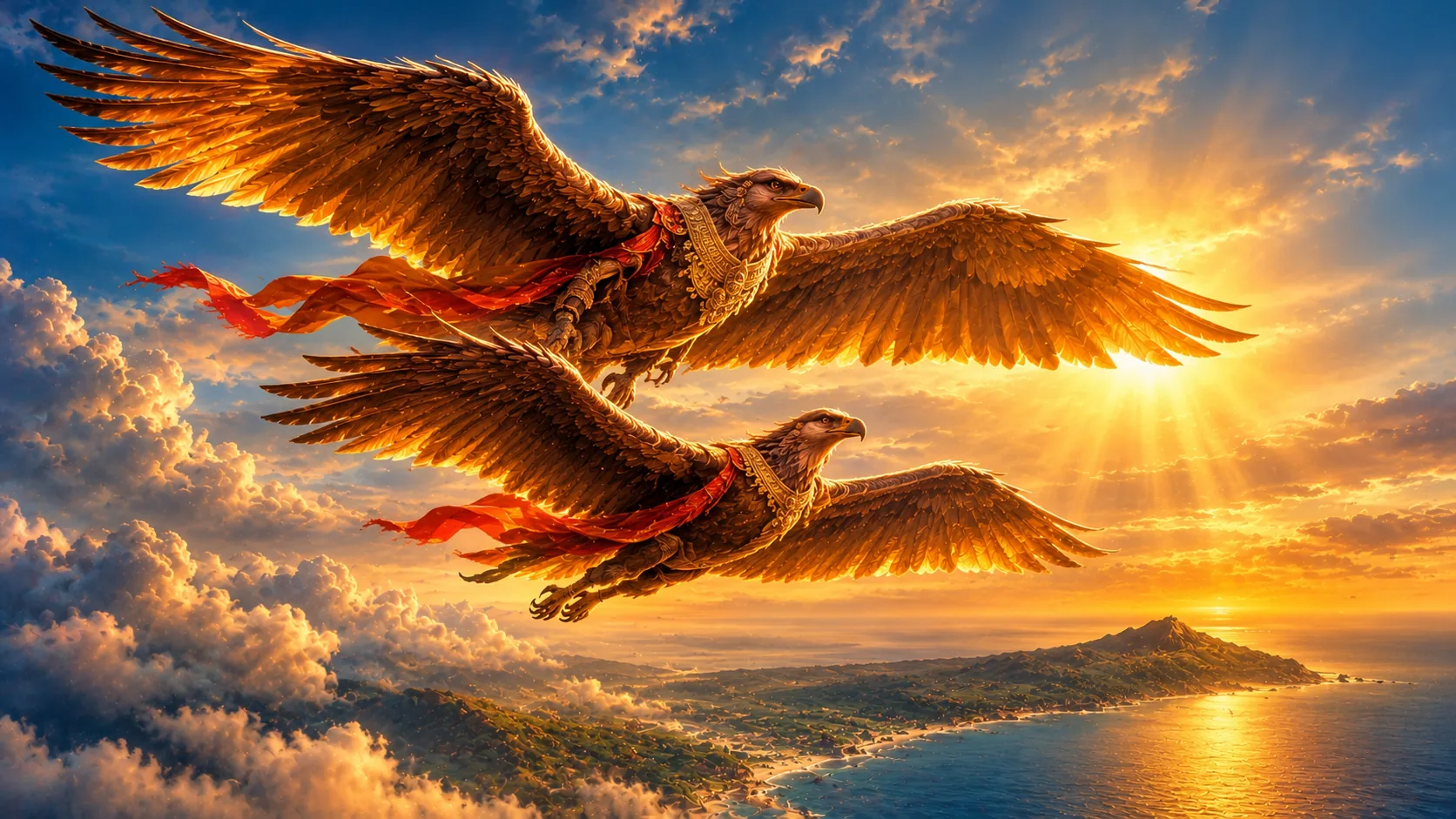
Long before Icarus became the West’s favourite warning about flight, India had its own story of two young birds who flew too close to the sun.
Their names were Jatayu and Sampati.
They were brothers. Young, powerful, and competitive in the way young brothers are. One day they challenged each other to a race. Not across a valley. Not across a forest. Straight up, toward the sun.
They climbed higher than any bird had climbed. The air thinned. The heat grew. And at some point Jatayu, the younger brother, began to burn.
Sampati saw it. Without thinking, he flew above his brother and spread his wings wide, shielding Jatayu from the sun.
Jatayu survived.
Sampati’s wings burned away. He fell to earth, onto a mountain by the sea, and for years he lived there unable to fly.
The Greek story ends with the fall. The Indian story does not.
That difference is worth sitting with. Icarus falls into the sea, and the lesson is complete. Do not reach too high. Know your limits. Stay close to the ground.
The story of Jatayu and Sampati has a fall in it too. But the fall is the middle of the story, not the end.
The one who fought
Many years later, Jatayu is old. He sees Ravana flying through the sky, carrying Sita away from Panchavati. He knows he cannot win. He is ancient, and Ravana is at the height of his power.
He attacks anyway.
Valmiki describes the fight in detail. Jatayu shatters Ravana’s flying chariot. He wounds him. He fights with everything he has left. Eventually Ravana cuts off his wings, and Jatayu falls.
He stays alive long enough for Rama and Lakshmana to find him. He tells them who took Sita and which direction they flew. Then he dies, and Rama performs his last rites himself, as a son would for a father.
Lepakshi, in present-day Andhra Pradesh, is where tradition says Jatayu fell. The name is said to come from Rama’s words to the wounded bird: “Le pakshi”, Telugu for “rise, bird”. People still travel there to stand on the ground where a bird chose courage over certainty.
The one who saw
Now the story returns to Sampati.
The search party sent to find Sita has reached the southern shore. They are exhausted and close to giving up. In their despair, they start talking about Jatayu, who died fighting for Sita.
On the mountain above them, an old wingless bird hears his brother’s name for the first time in years.
Sampati calls out to them. He asks what happened. When they tell him, he grieves. And then he does the one thing he can still do.
He looks.
Eagles in these stories have extraordinary sight. From his mountain, Sampati looks across a hundred yojanas of ocean and sees Lanka. He sees Sita, sitting in the Ashoka grove. He tells the search party exactly where she is.
Valmiki writes that as Sampati helps them, new wings begin to grow from his body. He flies again.
Height is not only about flying. It is about seeing.
I love this detail more than almost anything in the Ramayana.
Sampati could not fly for most of his life. But he never lost the thing flight had given him, which was perspective. The ability to see from height what nobody on the ground could see.
That ability turned out to be exactly what the mission needed. Hanuman’s leap, which India remembers every Dussehra, only happened because a wingless bird on a mountain told everyone where to aim.
There are always two kinds of value in any great undertaking. The courage to act, which Jatayu had. And the vision to see what others cannot yet see, which Sampati had. Rarely do both live in the same person. Almost always, both are needed.
What a fall teaches
I think about Sampati when I think about our own history in adventure sports.
Between 2010 and 2014, we ran skydiving camps in Dhana, Pondicherry and Baramati. They were full. People came from across the country. The demand was never in question.
Then they stopped.
Not because people stopped wanting to fly. Because India did not yet have what flight required. The weather was unpredictable. Geography was difficult. Regulations were complex. The infrastructure simply did not exist.
For years, the dream stayed on the mountain. Wingless, but watching.
What we were doing in those years was what Sampati did. Watching from height. Studying how the rest of the world had solved the problem. Seeing, from a distance, the twenty countries and dozens of markets where vertical wind tunnels had made human flight accessible, safe and repeatable.
And waiting for the moment when helping the larger mission would grow the wings back.
The fall is not the end of the story
If there is one thing Indian mythology teaches differently from almost every other tradition, it is this.
The fall is rarely the end.
Jatayu falls and is honoured as a hero. Sampati falls and becomes the one who sees. And when the moment arrives, his wings return.
Flying toward the sun was never the mistake. Both brothers were right to want to rise. What their story teaches is that rising takes more than ambition. It takes the right conditions, the right protection, and people willing to shield each other on the way up.
This festive season, as India celebrates Rama’s victory and prepares for his return home, it is worth remembering the two birds who made both possible.
One who fought.
One who saw.
Both of them, in the end, flew.
Curious about indoor skydiving?
FLY Bharat is bringing India’s first premium indoor skydiving experience to Bengaluru. The first tunnel opens at PLaY Arena, a venue already welcoming 45,000 visitors every month.
If you are an enthusiast who wants to be among the first to fly in India, join the waitlist at waltairgroup.com.
If you are an investor interested in the India opportunity, the final round is currently open to a limited group. Write to us at mukul@waltairgroup.com or rajesh@waltairgroup.com, or schedule a conversation at calendar.app.google/fXrt1eQf6PhMSeDL8.
Explore more stories, insights and updates at Waltair Group.